
However you are matched, these simple strategies will help you turn an awkward first meeting into a relationship that lasts beyond graduation.
BY PETE VAN HOUTEN
Your morning begins each day at 8 a.m. as you shut off your alarm clock, shower, and get dressed for your first class. A quick bagel for breakfast, grab the backpack, and out the door for General Psychology. But this morning, like the last six, you notice a pile of dishes in the sink. You can see the leftover lasagna from last night, now hardened on your favorite plate. Flakes of salad are on the kitchen rug, and the cheese you had bought two days ago remains on the counter, the bag open and the cheese uninvitingly hard. “I thought this was going to work out,” you say to yourself of your once idyllic roommate. “If this continues, I’m going to move out.”
Roommate Agreement
Rather than pack boxes, perhaps a better solution, Casper College Resident Hall Coordinator Liz Dobson advised, is a review of the roommate agreement.
Dobson said roommate conflict is a common story for any college student, and while trying at times, it can often be solved with simple and proactive communication.
“A roommate agreement is a document that helps college students living together establish shared expectations and ground rules,” Dobson said.
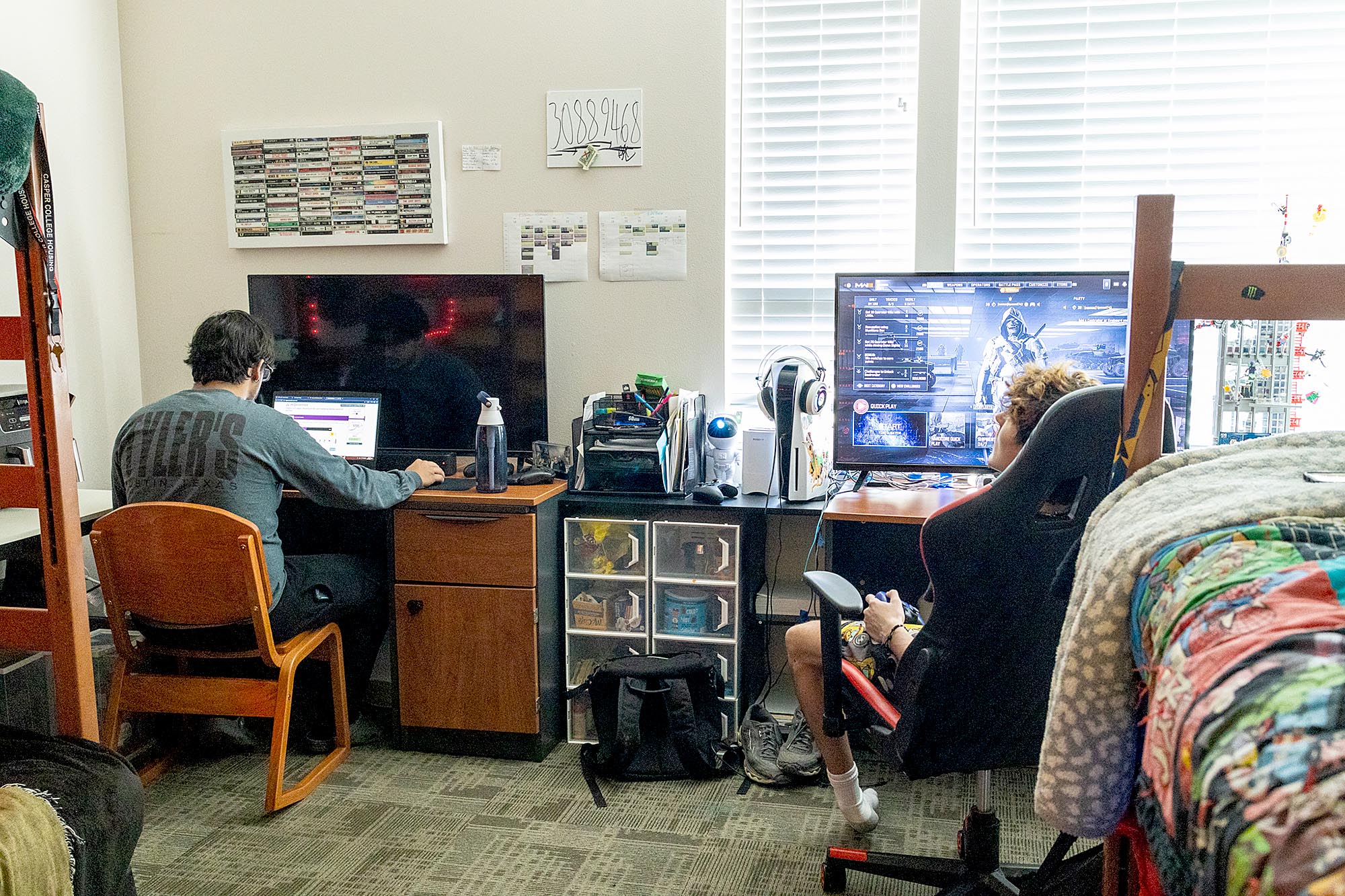
Sometimes called a roommate contract, the voluntary agreement allows the students to outline possible rules tied to sleep, noise, shared items, room temperature, study habits and personal space during their year together. The process is often facilitated by a Resident Advisor (RA), and while not legally binding, the agreement creates mutual understanding and gives roommates a reference point if conflicts arise later.
This is especially true of concerns about cleanliness, which is one of the most common areas of discontent. Using the contract, Dobson said the roommates can spell out a definition of cleanliness including what “doing the dishes” actually means and how often the trash should be taken out. Roommates can even identify who is responsible for cleaning shared areas like the shower or clearing hair from the drain.
The second notable area of contention is the inclusion of guests into the room and how often they can visit. “Over time, we make new friends, and we want to invite them to our room for board games, studying or conversation,” Dobson said. “But that might cause problems if the other roommate wants to study or does not want someone new sitting on their bed.”
Taylor Crook, who is in her third year as a Resident Assistant now that she has transferred to the University of Wyoming at Casper, said most problems can be solved if you are willing to talk. Before roommates are ever paired in the residence halls, each student completes a personality test that helps identify the values and expectations of each student. Using a Likert scale, Crook said the hall team can figure out the cleanliness level of each student to pair people who have similar definitions of noisy, food habits and personal space.
When Roommate Tension Needs a Real Conversation
“It’s a lot of people’s first time living with someone who is not their family, or communicating with people they haven’t been communicating with their whole life,” Crook said with a knowing smile.
Dobson, who trains all of her residence assistants in the art of crucial conversations, said she stresses focusing on the behavior rather than the personal. “Because, yeah, if you started the conversation with, ‘You’re the dirtiest person I’ve ever lived with,’ it’s probably not going to go over as well as, ‘Hey, when the trash piles up, I get really frustrated and it smells bad in the room,’” she said. “Seek out rectifiable behaviors.”
These rules apply for students whether they are living in the halls or off-campus in an apartment. Dobson said students in apartments should use a roommate agreement as well, and if they don’t know where to find a good form, search online or ask Dobson for a copy of what Casper College uses.
It’s best to do this early on, Crook said, because many of the disagreements arise in the living arrangement on day one. “It surges right at the beginning of the semester because everyone’s tensions are high,” Crook said. “These emotions will often continue through the mid-terms in October and will only fester if no one is willing to talk.”
Crook said she has often seen these agreements change over time because expectations change. “Perhaps the definition of clean is too hard for one of the roommates to meet, and a little grace is needed,” she said.
Dobson said in addition to solving potentially contentious issues, these sit-downs can foster valuable life skills.
“The more willing you are to step into a conversation about the things that aren’t going right,” she said, “the more you build that skill out now, the better. Down the road, when you’re having difficult conversations with your partner, your friends, your children or your boss, you did so because you assembled these skills while you were young.”
Even if it is only a conversation about lasagna.
Strategies for a Successful Roommate Agreement
If you are seeking a new roommate, consider these tips provided by the Casper College residence halls team.
-
1. Prioritize Compatibility Over Friendship
- A great friend doesn’t always make a great roommate. Focus on finding someone whose habits and lifestyle align with yours. And remember, a compatible stranger can become a lifelong friend, but a mismatched best friend can strain the relationship.
-
2. Have an Honest Conversation Before Committing
- Before agreeing to live together, talk openly about lifestyle habits such as sleep schedules, study routines, social preferences, and cleanliness standards. A 30-minute conversation upfront can prevent months of conflict.
-
3. Watch for Red Flags Early in Your Talk
- If someone is unresponsive, dismissive of your concerns, or evasive about their habits during initial conversations, take note. How someone communicates before living together often predicts how they’ll handle conflict after.
-
4. Use Your School’s Matching Resources
- Most colleges offer roommate-matching platforms. These tools pair you based on compatibility surveys, which is a much better starting point than randomly being assigned. Ask Casper College’s residence hall staff for examples.
-
5. Connect on Social Media First
- Before move-in day, connect with potential roommates on social media or through Facebook groups for your incoming class. This gives you a low-pressure way to gauge personality and communication style.
-
6. Create a Roommate Agreement
- You didn’t think we’d end this article without another plug for the agreement? Put expectations in writing, even if it’s in an informal shared Google Doc. This keeps everyone accountable.
Key Insights:
- Article Focus
- Practical strategies and communication frameworks for navigating college roommate relationships and shared living arrangements.
- Takeaways/Statistics
- Written roommate agreements establish shared expectations regarding cleanliness, study routines, guest visits, and personal space.
- Student Life uses compatibility surveys and Likert-scale personality assessments to match students effectively.
- Crucial conversation techniques focus on rectifiable behaviors rather than personal attacks to resolve conflicts early.
- Navigating shared living spaces builds essential interpersonal negotiation skills that carry into professional careers.